


Decode the Colors: Understanding Devon Rex Color Genetics

Cat color genetics can seem overwhelming at first glance—full of letters, loci, and terminology that feel more like a biology lesson than something related to your favorite furry companions. But it doesn’t have to be complicated. Once you understand a few simple building blocks, everything starts to fall into place. With just the basics, you’ll be able to predict colors, recognize patterns, and understand what makes each cat’s coat so unique. From there, it becomes not only easy to grasp, but genuinely fascinating.
Cat coloration is determined by a handful of key genes, and then modified by others. Think of it like layers:
base color → black modifier → dilution → pattern → modifiers (Colorpoint & Silver) → white.
1) The Two Base Colors in Cat Genetics
When you strip away all the patterns, dilution, white spotting, and fancy modifiers, every cat’s coat begins with just two possible base colors: Black and Red.
Everything else in the feline color world is simply a variation of these two.
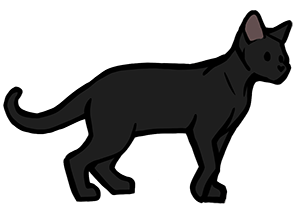
1. Black (The Eumelanin Pigment)
Black is considered the default pigment in cats. If a cat doesn’t carry the gene for red, it produces eumelanin, the dark pigment that forms all black-based colors.
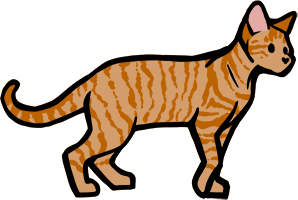
1. Red (The Pheomelanin Pigment)
Red comes from the Orange (O) gene, which turns black pigment into pheomelanin, a warm, orange-based pigment.
But Wait! I Have a Cat with Two Base Colors!
2) Torties and Calicos
The Genetics Behind Two-Color Cats
How Color Is Inherited on the X Chromosome
The gene that determines whether a cat is red/orange or black-based is located on the X chromosome.
To understand this, it helps to look at how kittens inherit their sex chromosomes.
Females (XX): Can Be Both Red and Black
Female cats have two X chromosomes—one from each parent.
Because each X can carry different color information:
Mom may pass o (black)
Dad may pass O (red)
A kitten who inherits one O and one o will show both pigments → a tortie or calico.
This is the only natural way cats display two base colors at once.
Males (XY): Only One Color
Male cats receive:
X from mom
Y from dad
Because they get only one X, they can only express one version of the color gene:
X = O → red
X = o → black-based
This means mom determines the color of her male kittens.
Examples:
Red mom → all male kittens will be red-based
Calico mom → male kittens may be black or red
Male torties are rare and typically occur only when the cat has XXY chromosomes.
Tortie vs Calico
(What Makes Them Look Different?)
Both torties and calicos are red + black base cats.
White spotting is what changes the pattern.
Tortie = Red + Black (NO white or very little)
Colors appear:
mixed
marbled
swirled
blended together
Calico = Red + Black + White
White spotting separates the colors into:
big patches
bold areas
clear contrasts
White basically decides how big the red/black patches will be.
More white = bigger, cleaner patches.
White levels affect the final look:
Low white → looks mostly tortie
Medium white → classic calico
High white (harlequin/van) → mostly white with a few big patches

Why White Makes the Colors Patchy (Super Basic Explanation)
White spotting isn’t actually a “color” gene — it’s a gene that blocks color.
When a kitten develops in the womb, pigment cells travel across the body like little paintbrushes.
But the white gene slows them down or stops them.
So wherever the pigment cells don’t reach, the fur grows in white.
Because the white areas interrupt where color can go, the red and black colors end up in separate islands or patches instead of blending together.
Quick Summary (Super Simple Version)
Red vs black color is decided on the X chromosome
Females get two X's, so they can be both red + black
Males get one X, so they’re usually one color
Tortie = red + black blended
Calico = red + black separated by white
The more white, the bigger the patches
Most clubs register calicos as Tortis with White, even though we know them as Calicos.
3) The Black Modifiers
How Black Becomes Chocolate or Cinnamon
While black is one of the two base pigments in cats, it can be genetically modified into a whole spectrum of warm brown shades. These variations come from the B locus, a gene that controls how eumelanin (black pigment) is produced.
The B locus has three versions—black, chocolate, and cinnamon—arranged in a simple dominance order:
B (black) > b (chocolate) > bl (cinnamon)
Understanding these three alleles explains how black pigment transforms into its lighter and warmer relatives.
Chocolate: The Middle Shade
Chocolate appears when a cat inherits two copies of the chocolate allele (b/b). This mutation lightens pure black into a rich, warm brown—think “milk chocolate.” The pigment particles are slightly altered, softening the overall tone.
Genotypes:
b/b = chocolate
B/b = black carrying chocolate
Cinnamon: The Lightest Shade
Cinnamon is produced by the most recessive version of the gene, bl, and only appears when a cat inherits bl/bl. Cinnamon lightens the pigment even further than chocolate, producing a warm, spicy, reddish-brown coat—lighter and more golden in tone than chocolate.
Genotypes:
bl/bl = cinnamon
B/bl = black carrying cinnamon
b/bl = chocolate carrying cinnamon
How They Relate
All three—black, chocolate, and cinnamon—are part of the same pigment family, and considered a Black Base. The gene doesn’t change the type of pigment (which remains eumelanin); it modifies how intensely or warmly it is expressed:
Black → full-strength pigment
Chocolate → softened brown pigment
Cinnamon → the lightest, warmest brown variant

4) Dilution
How Full Colors Become Their Softer Versions
Once you understand the two base pigments—black and red—the next major gene to learn is the dilution gene, often written as D (dense) and d (dilute). This gene doesn’t change which pigment a cat has. Instead, it changes how intensely that pigment shows.
Think of it as the difference between a fully saturated color and a pastel version.
How the Dilution Gene Works
D (dominant) = full, dense color
d (recessive) = diluted color (only shows when a cat has dd)
A cat must receive two copies of the dilute allele (d)—one from each parent—before the coat appears diluted.
Genotypes:
DD → full color
Dd → full color but carries dilute
dd → dilute color
What Dilution Looks Like
Dilution softens the pigment, turning bold colors into lighter, gentler versions.
Black-Based Colors
Black → Blue
Black (B-) becomes Blue (B- with dd)
Blue appears as a soft gray, ranging from slate to light blue.
Chocolate → Lilac
Chocolate (b/b) becomes Lilac (b/b with dd)
Lilac is a frosty lavender-beige tone, much lighter than chocolate.
Cinnamon → Fawn
Cinnamon (bl/bl) becomes Fawn (bl/bl with dd)
Fawn is a warm sandy beige—gentle, muted, and lighter than cinnamon.
Red-Based Colors
Red → Cream
Red (O) becomes Cream (O with dd)
Cream is the dilute form of red and can appear anything from pale ivory-apricot to soft peach.


How Dilution Changes Calico Colors
A full-color calico has:
Black patches
Red patches
White areas
When you add dd, both pigments lighten:
Black becomes Blue
Blue is a soft gray ranging from light silver-blue to deep slate.
Red becomes Cream
Cream ranges from pale ivory-apricot to soft peach.
So Black, Chocolate, and Cinnamon will all have RED as their other base color.
Blue, Lilac, and Fawn will all have CREAM as their other base color.
A calico must always show one black-based color and one red-based color — and both colors must be either full-color or dilute together.
You cannot have:
two blue-based colors
two red-based colors
a mix of full-color + dilute (example: blue + red, or black + cream)
5) Agouti and Tabby Patterns
Once you understand a cat’s color, the next step is learning how that color is arranged on the coat. That arrangement is controlled by the Agouti gene and the Tabby pattern genes. Together, they decide whether a cat is a solid, striped, spotted, swirled, or ticked pattern.
Think of “color” as the paint, and “tabby pattern” as the brush strokes.
The Agouti Gene (A/a)
The On/Off Switch for Tabby
The Agouti gene determines whether a cat’s coat shows a tabby pattern at all.
A/ = tabby is visible
a/a = tabby is hidden, making the cat appear solid
A cat with a/a is solid black, solid blue, solid chocolate, etc.—unless the cat is red, because red pigment naturally allows tabby to show through (that’s why all red cats look tabby).
However Red Tabbies can be genetically "solid".
In clubs like TICA, we register cats based on Phenotype, or what we see.
So all Reds in TICA are registered as a Tabby of some sort.
However, some clubs register cats based off Genotype, or what their genetics are. Which means some clubs register reds as solid red, even if they appear as tabby. And there is a neat little trick to tell which Red Tabbies are Solid Reds Genetically and which are True Tabbies.
Solid Red - All Red on the muzzle | True Tabby - White Whisker Pads |
 |  |
 |  |
When Agouti is present (A/-), the coats display one of the tabby patterns below.
The Tabby Pattern Gene (T)
Which Tabby Pattern Shows
Once Agouti has “turned on” the pattern, other genes decide which type you get. These are the major tabby patterns we see in Devons:
1. Mackerel Tabby (Mc)
Genetics: Mc (dominant)
Mackerel tabbies have:
Narrow, vertical stripes
A central spine line
A classic “M” on the forehead
This is the most common tabby pattern and looks similar to tiger striping.

2. Classic Tabby (mc/mc)
Genetics: mc is recessive; must inherit two copies
Classic tabbies have:
Bold swirling patterns
A “bullseye” or marbled look on the sides
Broader, more dramatic markings
This pattern is common in breeds like the American Shorthair.

3. Spotted Tabby (Sp)
Genetics: A modifier that breaks up stripes into spots
Spotted tabbies display:
Round or oval spots
Broken stripes
Spotted is considered dominant over mackerel because it simply disrupts the stripes.

Because of the Devon Rex’s curly coat, tabby markings often become distorted or broken as the cat matures. The curls disrupt the pattern, making it difficult to see clear striping on the body. However, the markings usually remain most visible on the face, legs, and tail.
In kittens—when the coat is shorter and the curl hasn’t fully developed—the tabby pattern is much easier to recognize.
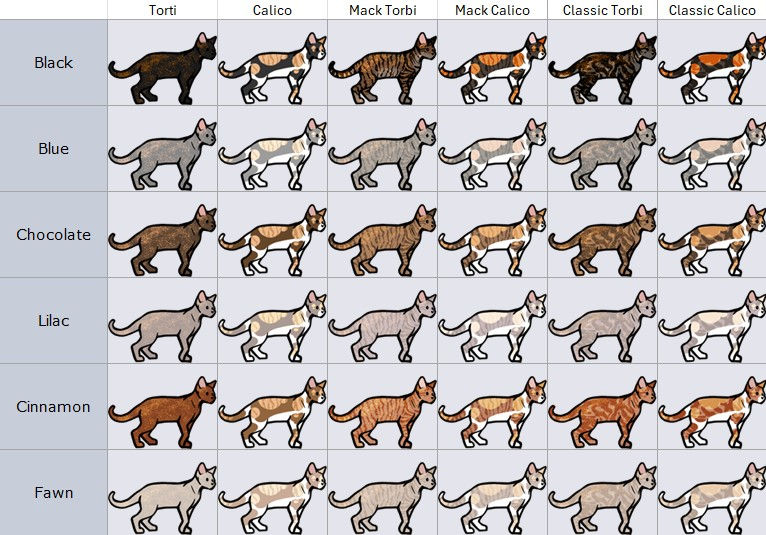
For simplicity and space, I’ll be showing only Mackerel (Mack) and Classic tabby examples.

“Black” tabbies are often called brown or grey tabbies by the general public, but this can be misleading—they are not chocolate or blue. To identify the cat’s true genetic color, focus on the color of the stripes, not the background fur. The tail tip is usually the easiest place to check (unless it’s white).
Black tabbies can have backgrounds ranging from cool grey to warm mahogany, which is why they may look brown or grey depending on the lighting and their coat modifiers. But no matter how warm or cool the background appears, if the stripes are black, the cat is genetically a black tabby.
This explains why many black tabbies look brownish without being chocolate—the warmth comes from agouti banding and modifiers, not from the chocolate gene.
Tabby Gene and Torties
Torties can have tabby patterns—this is called torbie (tortie + tabby).
The tabby gene works exactly the same in torties as in any other color; the only difference is that torties have both red and black pigment, so the tabby pattern shows up in both colors at once.
The black areas become black tabby stripes
The red areas become red tabby stripes
White (if present) still separates patches, just like in calicos
Whether a tortie becomes a torbie depends on the Agouti gene:
Agouti (A) → tabby pattern shows → torbie
Non-agouti (a) → tabby pattern is masked → tortie
Red always shows tabby striping due to how red pigment works, so even “solid torties” often look slightly torbie in their red areas.
Quick Summary: Agouti vs. Tabby Genes
The Agouti gene controls whether a cat’s tabby pattern is visible or hidden.
A = tabby shows
a = tabby is masked, making the cat look solid (except red cats, which always show tabby)
The tabby pattern genes decide which type of tabby the cat will have—striped, swirled, spotted, or ticked.
In simple terms:
Agouti decides “tabby or no tabby.”
The tabby genes decide “what kind of tabby.”
Agouti is the light switch,
Tabby pattern genes are the style of wallpaper behind it.
If the switch (Agouti) is OFF, you can’t see the wallpaper, even though it’s still there.
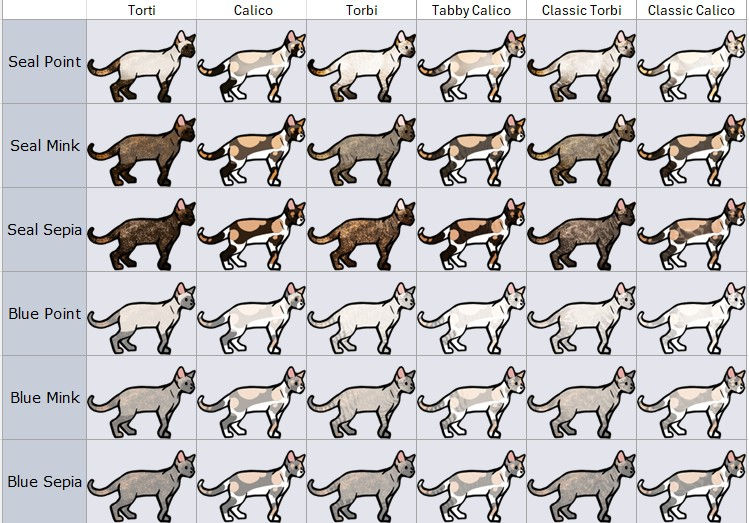
6) Colorpoint Cats
Understanding the C Locus
Some of the most striking cats, like Siamese, Himalayan, Tonkinese, and Burmese, have colorpoint coats—darker coloration on their extremities (ears, face, paws, and tail) while the body remains lighter. This unique effect is controlled by the C locus, also known as the colorpoint gene.
How the C Locus Works
The C locus determines how much pigment the cat can produce at normal body temperature:
C (full color) → produces full, dark pigment all over the body
cs (Siamese, “Point”) → temperature-sensitive; pigment develops in cooler areas (extremities), body stays lighter
cb/cs (Tonkinese, “Mink”) → intermediate temperature-sensitive pattern
cb (Burmese, “Sepia”) → milder temperature-sensitive pigment; body is darker than Siamese or Mink
The cs and cb alleles are recessive, so a cat must inherit two copies (cs/cs, cb/cb) to fully express the pattern. If the cat has C/, it will display full, uniform coloration.
Light-to-Dark Scale (C Locus Patterns)
From lightest to darkest, the C locus alleles produce the following effect:
cs/cs (Point) → very light body with dark extremities
cb/cs (Mink) → intermediate body tone and darker points
cb/cb (Sepia) → darker body, subtle contrast with points
C/ → full color, darkest overall (uniform pigment across the body)
Temperature Effect
Colorpoint cats are darker where the body is cooler:
Ears, nose, paws, tail → coolest parts, darkest pigment
Body core → warmer, lighter pigment
This is also why in the winter, colorpoint cats will get darker, and lighten back up in the summer.
What Colorpoint Kittens Look Like at Birth
Colorpoint kittens are born almost white, and their characteristic points develop gradually as they grow. The exact appearance at birth depends on the C locus allele:
Point (cs/cs): Nearly pure white or very pale cream. Dark points appear first on ears, then face, paws, and tail. High contrast between body and points in adulthood.
Mink (cb/cs): Very light cream or ivory, slightly warmer than Siamese. Dark points appear gradually, body develops a medium tone. Moderate contrast between body and points.
Sepia (cb/cb): Light fawn or ivory, darker than Siamese or Mink kittens. Body gradually darkens to rich sepia, extremities darken slightly. Low contrast between body and points; overall appearance is more uniform.
Kittens are born almost entirely light because their bodies are warm, preventing full pigment expression. As they grow and extremities cool, their adult colorpoint pattern emerges.
Colorpoint cats don’t reach their full intensity of color right away.
Even though their points begin darkening during kittenhood, they don’t achieve their true adult color until their full coat matures — which can take up to 2 years.
Name Differences:
Seal vs. Black
Lynx vs. Tabby
Color names stay the same when paired with the colorpoint gene.
For example, a chocolate cat with points is still called a Chocolate Point.
But there’s one major exception:
Black becomes Seal when expressed as a colorpoint.
Because the C locus lightens pigment on the body, a black-based point cat takes on a deep, dark seal-brown tone instead of true black. This makes Seal cats appear richer and warmer, while true chocolates remain lighter and distinctly different.
The same renaming happens with tabbies. A tabby cat with points isn’t called a “Tabby Point”—it becomes a Lynx Point.
So:
Black + points = Seal Point
Tabby + points = Lynx Point
A fun bit of terminology that helps distinguish pointed cats from their non-pointed counterparts!



Eye Color
Colorpoint cats are famous for their striking blue eyes, which result from the same temperature-sensitive C locus gene. The restriction of pigment in the body allows light to scatter in the eyes, producing shades of vivid blue:
Siamese (Point): Deep sapphire blue, often intense and vibrant
Tonkinese (Mink): Aqua or turquoise—softer than Siamese
Burmese (Sepia): Yellow-gold to greenish
Telling Point vs. Mink by Eye Color
Blue and aqua eyes can look very similar, and on their own, it can be hard to tell which is which—especially in kittens. The difference becomes much more noticeable when the two colors are side by side, but that’s extremely rare. Odd-eyed cats are uncommon to begin with, and an odd-eyed cat with one blue eye and one aqua eye is even rarer, making side-by-side comparison unusual to see in a single cat.
Fortunately, there’s an easy trick: look at the pupils in light.
Siamese / Point (Blue eyes): The pupil will reflect a red glow in bright light.
Tonkinese / Mink (Aqua eyes): The pupil will reflect a greenish glow in bright light.
This simple tip makes it much easier to distinguish a Point from a Mink kitten before their full color develops. Or even if a solid white kitten will end up being an Odd Eye.
Blue Eye | Aqua Eye | Odd-Eye Blue & Aqua |
 |  |  |
Red hue to the Pupil | Green hue to the Pupil | Blue (R) & Aqua (L). Enhanced to show color difference. |
7) Silver
How Pigment Gets Restricted to Create Cool, Frosted Coats
After learning how pigment type and dilution affect color, the next major gene to understand is the silver gene, often written as I (inhibitor) and i (non-silver).
This gene doesn’t change which color a cat has — it changes how much of the pigment is allowed to show on the hair shaft.
Think of it as removing the background color so only the tips remain, creating a cool, frosted, or sparkling appearance.
How the Silver Gene Works
I (dominant) = inhibits pigment → produces silver
i (recessive) = no inhibition → no silver
A cat needs only one copy of the silver allele (I) to show silver.
Genotypes:
I/I → silver
I/i → silver
i/i → non-silver
Because silver is dominant, a non-silver cat cannot produce silver kittens unless bred to a silver cat.
Whereas I/I cats (homozygous silver) will always produce silver kittens because there will always be at least one I gene passed on.
What Silver Does
The silver gene blocks eumelanin (black-based pigment) from forming at the base of the hair shaft.
This creates a coat with:
white or pale roots
colored tips
a cool, ashy tone overall
Silver does not fully suppress red pigment, which is why reds and creams can look less obviously silver.
How Silver Appears in Different Patterns
Silver can modify any black-based color, and the effect changes depending on the pattern.
Silver Tabby
Tabbies keep their stripes or spots
All the “background” areas become white or pale
The cat looks crisp, cool-toned, and high-contrast
Examples include:
Black Silver Tabby, Blue Silver Tabby, Chocolate Silver Tabby, etc.
Smoke
Solid-colored cat with white roots and dark tips
The white shows when the coat parts or moves
Smokes tend to look darkest when still and most dramatic in motion
Like pointed kittens, smoke kittens do not show their final color at birth. But instead of darkening with age (as pointed cats do), smoke cats lighten at the base of the coat as their adult fur grows in.
Smokes can range from very lightly smoked to heavily smoked in appearance.
This variation depends on how much of each hair shaft is white versus pigmented. In lightly smoked cats, you may only see a hint of pale undercoat when the fur parts or moves. In heavily smoked cats, the contrast is much stronger—dark tips over a bright white undercoat—making the smoke effect far more dramatic.
Because of this range, some smokes look almost solid at first glance, while others show a striking, high-contrast “smoky” appearance.
Why Some Black Cats Have a Grey Undercoat (But Aren’t Smokes)
Not all black cats are the same shade all the way down the hair shaft. It’s completely normal for a solid black cat to have a grey or lighter undercoat, and it doesn’t mean they’re a Smoke.
A true Smoke needs the inhibitor gene (I), which makes the undercoat bright white with high contrast.
A little grey at the base isn’t enough to count.
Remember, if neither parent is silver or smoke, the kittens won’t be silver or smoke either.
Black - Little grey around neck, not a smoke
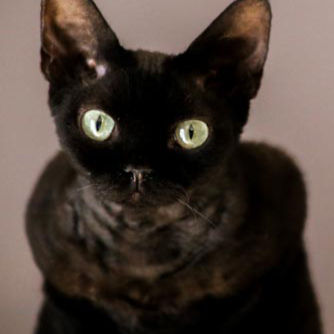
Black with light smoking
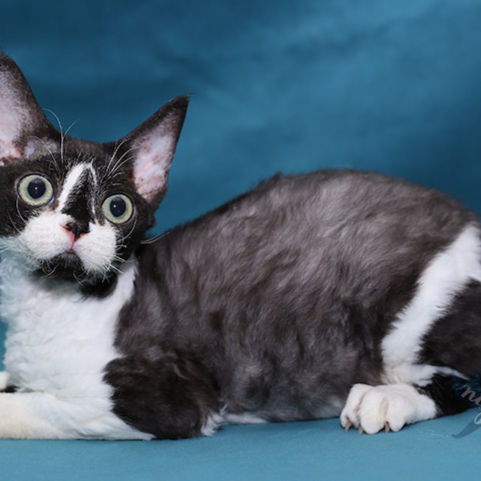
Black with heavy smoking

Additional Notes: Tarnish
Some silver cats — especially smokes and those with red genetics — may show tarnish:
Warm patches
Brownish or rusty shading
Often on the face or paws
Tarnish does not mean the cat isn’t silver.
It's simply a quirk of the gene.


Cats Can Have Multiple Modifiers!
One of the most fascinating parts of feline genetics is that a cat’s final color isn’t determined by just one gene.
Instead, multiple layers of modifiers can stack together — each one changing how pigment appears.
This means a single cat can absolutely carry:
a base color modifier (like black, chocolate, or cinnamon)
a pattern or temperature modifier (like colorpoint/mink/self/tabby)
a pigment restriction modifier (like silver)
All at the same time.
Colorpoint AND Smoke / Silver Genes

Torti / Calicos with Colorpoint AND Smoke / Silver Genes


We are finally coming to the end....
8) White Marking Gene
(White Spotting Gene)
The white spotting gene, written as S, is responsible for creating all forms of white patches on a cat — from a tiny locket of white on the chest all the way to nearly solid-white patterns like van and harlequin.
This gene doesn’t change the cat’s actual color.Instead, it affects how pigment cells spread across the body during development.
How the White Spotting Gene Works
The gene has two forms:
S = white spotting (dominant)
s = no white (recessive)
A cat only needs one copy of S to show white markings.
Genotypes:
SS → usually produces high white
Ss → usually produces low to medium white
ss → no white
The more copies of S, the more white the cat tends to have — though exact expression can vary.
What the White Spotting Gene Actually Does
White spotting happens because the gene blocks pigment migration during early embryonic development.
Pigment cells (melanocytes) start at the spine and spread outward.
The white spotting gene slows or stops that migration in certain areas.
The more the gene restricts pigment migration, the larger the white patches will be.
Levels of White Spotting
Here’s how S expresses visually:
No White (ss)
Pigment spreads normally
No white patches anywhere
Low White (Ss)
Often includes:
chest locket
white paws
small belly or chin patches
classic “tuxedo” patterns
Medium White (Ss or SS)
Big patches of color and big patches of white
Clear separation between pigmented areas
High White (SS)
Mostly white
Only a few patches of color remain
Faces often have one or two colored patches
Van Pattern (usually SS)
Almost completely white
Color restricted to head and tail only
Extremely limited pigment migration
S Is Dominant — But Not Fully Predictable
While SS tends to produce more white than Ss, white spotting has variable expression.
This means the exact amount of white can differ even between siblings with the same genotype.
Factors that affect expression include:
modifying genes
breed-specific genetics
random embryonic variation
This is why two “medium white” parents can produce kittens with low, medium, or high white.

9) Solid White Cats
(The Dominant White Gene)
Solid white cats may look similar to high-white or van-pattern cats, but genetically they are completely different.
True solid white cats are created by the dominant white gene, written as W, which masks every bit of pigment the cat would normally have.
Unlike the white spotting gene (S), which creates patches of white, the dominant white gene turns the entire coat white, regardless of the cat’s actual underlying color.
How the Dominant White Gene Works
The dominant white gene works by blocking pigment production entirely.
Instead of stopping pigment migration in certain areas (like the S gene), the W gene simply prevents pigment from forming at all.
Genotypes:
Ww or WW → solid white
ww → not white (normal color expression)
Just one copy of W is enough to make a cat fully white.
Solid White Cats Still Have a Hidden Color
Even though the cat looks white, it still has an underlying color and pattern genetically.
For example, a solid white cat might actually be:
a tabby
a tortie
a calico
a colorpoint
a silver
a smoke
or any other combination
But the W gene masks all of it. Think of it as ONE GIANT white marking.
This is why solid white cats can produce kittens in unexpected colors — they pass on their hidden genes.
How to Identify a True Solid White Cat
A solid white (W) cat will have:
completely white fur
pink paw pads
pink nose leather
no visible pigment patches anywhere
eyes that may be blue, gold, green, or odd-eyed
High white/van cats (SS) often keep color on the head or tail, but W cats have none at all.
Why Some White Kittens Are Born With a Little Spot of Color
Some solid white kittens are born with a tiny patch of color on their head or body.
This is completely normal — and the spot usually fades away within a few weeks or months.
This doesn’t mean the kitten isn’t truly solid white.
It's just part of how the dominant white gene (W) works.
Why It Happens
The dominant white gene blocks pigment from forming.
But in a few kittens:
a small area gets pigment before the W gene fully takes over
that early color shows as a tiny patch
once the kitten starts shedding its baby coat, the spot disappears
The adult coat grows in pure white.
What the Spot Means
The spot can show what the kitten’s hidden color would have been.
For example:
a black spot = the cat is genetically black-based
a red spot = genetically red
a tabby-looking smudge = genetically tabby
The cat keeps the genetics but loses the visible color.
Important Notes
The spot fades — this is normal for solid white cats
Solid whites (W) can have temporary color spots
High-white spotting cats (S gene) do not lose their patches
The kitten is still genetically solid white
Last but not least....
10) Eye Colors
Understanding Eye Colors in Cats
A cat’s eye color is determined by two main factors:
The amount of pigment (melanin) in the iris
Genetic modifiers that limit or control pigment production (like colorpoint, mink, silver, or white)
Unlike coat color, eye color in cats has nothing to do with the pigment type (black vs. red) — it depends entirely on how much pigment the iris produces and where that pigment is allowed to show.
The Basic Rule of Eye Color
Less pigment = lighter eyes
(blue → aqua → green)
More pigment = darker eyes
(green → gold → copper)
Base Eye Colors (from least to most pigment)
1. Blue Eyes
Blue eyes have little to no pigment.
The blue color comes from light scattering, not from actual blue pigment.
Common in:
Colorpoint (cs/cs)
White cats (W)
High-white spotting (S)
Odd-eyed cats (one blue, one colored)
2. Aqua / Teal Eyes
A blend between blue and green — found mainly in mink cats (cb/cs).
This happens because minks produce some pigment in the iris, but not enough to turn fully green.
3. Green Eyes
A moderate amount of pigment produces green.
Green is common across:
Tabby cats
Solid-colored cats
Silver cats
Many natural (non-pointed) breeds
Devon Rex with full-color or sepia genetics
Green ranges from pale mint → medium green → deep emerald.
4. Gold / Yellow Eyes
Gold eyes have more pigment, producing rich shades of:
yellow
amber
sunflower gold
Very common in:
Black-based cats
Solid colors
Sepia (cb/cb) cats
Silver breeds
Reds/creams (including tortie/calico)
5. Copper Eyes
The highest pigment level creates deep:
copper
orange
pumpkin
Common in some breeds (e.g., Persians), but less common in Devon Rex unless the line selectively breeds for it.
Blue |  |  |  |
Aqua |  |  | 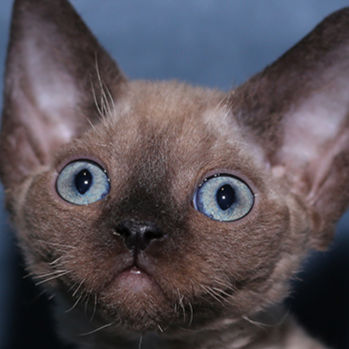 |
Green |  |  |  |
Gold & Copper |  |  |  |
Modifier Genes That Affect Eye Color
Some genes change or limit eye pigment expression:
Colorpoint (cs/cs) → Blue Eyes
The colorpoint gene blocks pigment formation at normal body temperatures — including the iris.
This results in blue eyes for life.
Mink (cb/cs) → Aqua / Teal Eyes
Mink cats have partial pigment restriction, producing aqua or blue-green eyes.
Sepia (cb/cb) → Yellow/Gold/Green Eyes
Higher pigment levels produce:
gold
light green
chartreuse
White (W) and High White (S) → Blue, Gold, Green, or Odd Eyes
Because these genes block or alter pigment migration, they can cause:
blue eyes
green eyes
gold eyes
odd eyes (one blue, one gold/green)
Blue eyes in white cats do not mean they are colorpoint.
Silver (I) → Enhances Eye Contrast
Silver cats often show:
bright green
gold-green
chartreuse
Not because silver changes eye color — but because it removes warm tones from the coat, making the eyes appear more vivid.
Eye Color in Tortoiseshells & Calicos
Torties and calicos can have any eye color, but they often lean toward:
gold
yellow
green
Nothing about tortie genetics limits eye color.
Kitten Eye Color
All kittens are born with blue eyes, but most will change.
General timing:
4–6 weeks: color begins shifting
8–12 weeks: green/gold/turquoise starts appearing
4–6 months: base color set
Up to 1–2 years: final shade deepens
Pointed cats stay blue the whole time.
Eye Color Depth in Pointed Devon Rex (Based on Typical Experience)
In pointed Devon Rex, the depth of blue eye color often varies depending on the point color. Seal Point Devons most commonly show the deepest, most vivid blue eyes, while lighter colors—such as Red Point or Cream Point Devons—tend to have softer, paler shades of blue. Although individual cats can vary, this pattern is frequently seen within Devon Rex lines and is a helpful reference when evaluating eye color in pointed Devons.
Quick Summary
Blue = no pigment
Aqua = partial pigment (mink)
Green = moderate pigment
Gold/Copper = high pigment
Colorpoint, white spotting, and dominant white can override normal eye color rules
Kittens start blue but most change as they grow
Devon Rex Type | Typical Eye Colors Allowed |
Colorpoint Devon | Blue |
Mink Devon | Aqua |
Sepia Devon | Gold / Yellow |
Non-Pointed Devon (standard colors) | Green, gold, copper |
White Devon | Blue, gold, green, odd-eyed |
Real-Life Example of Cat Genetics & Possible Kitten Outcomes
Parent Summary
Jack – Father
Seal Mink Tabby
Carries Siamese colorpoint
Carries Burmese/sepia (mink)
Carries white spotting
Carries agouti (tabby)
No dilution
Sabrina – Mother
Solid tortie (non-agouti)
Carries Burmese/sepia (mink)
Carries dilution (carrier only, no dilutes possible with Jack)
No Siamese point, no white spotting
Possible Offspring From Jack × Sabrina
Base Colors
Black
Red
Tortie girls (black + red)
All full-color only (no blues, creams, or blue-creams)
Patterns
Solid (very likely, Sabrina is solid)
Tabby (if Sabrina passes agouti)
Torbie (tortie + tabby)
White Spotting
With white – if kittens inherit Jack’s white spotting gene
Without white – if they don’t
High white unlikely (only one parent carries it)
Colorpoint / Mink / Sepia
Because both parents carry Burmese/sepia (mink) and Jack also carries Siamese point, their kittens can be:
Mink (Burmese-type shading)
Sepia (if they inherit two Burmese/sepia-type alleles)
Pointed (Siamese-style points)
Lynx versions of all of the above if tabby expresses
Super Simple Summary
From Jack (Seal Mink Tabby) × Sabrina (Solid Tortie, mink carrier) you can get:
Black, red, and tortie kittens
Solid, tabby, or torbie
With or without white
Mink, sepia, and point kittens
Seal / red / tortie minks
Seal / red / tortie sepias
Seal / red / tortie points
Lynx (tabby) versions of those
No dilute colors, no chocolates/cinnamons, etc.—but a very wide range of full-color Devons in solids, tabbies, torties, minks, sepias, and points.
Final Thoughts
Cat color genetics can feel complex at first, but once you break it down, it becomes an incredibly fun and fascinating part of understanding the Devon Rex breed. While we don’t breed for any specific colors, having a solid grasp of genetics allows us to make educated guesses about what our pairings may produce. It adds an extra layer of excitement to planning litters—watching how different genes interact, how patterns combine, and how kittens surprise us with traits we didn’t expect.
At the end of the day, every Devon Rex kitten is unique, curly, and full of personality no matter what color they come in. Genetics simply lets us appreciate the science behind the beauty and gives us a deeper understanding of how those one-of-a-kind coats come to be.
Credit
Due to our cattery never having or producing a cinnamon or fawn Devon Rex, Prairieheart Cattery kindly provided the photos used as examples for these colors.
If you’d like to support Prairieheart for providing the example photos, you can visit them here:
All other cat photos and graphics throughout this blog are either from our own cattery, illustrated by me, or generated using AI.
Want to see even more color examples? We have additional real-life Devon Rex photos at the bottom of our Devon Rex page—feel free to take a look!


Comments